Source Airline Approved Folding Mobility Scooter for Travel
Source airline approved folding mobility scooter options from 30 verified listings. Buyers can compare battery capacity, weight capacity, and folding dimensions to find suitable units for travel, daily commuting, and elderly care.
Key considerations
Products List


Comprehensive Sourcing Guide
Airline Approved Folding Mobility Scooter Sourcing Guide
Procuring mobility scooters for air travel requires a precise balance of portability, regulatory compliance, and passenger safety. The core challenge lies in identifying units that meet strict airline dimensional and weight limits while maintaining the structural integrity necessary for daily use. Buyers must navigate a market where "airline approved" is often a marketing term rather than a certified standard, necessitating rigorous verification of battery specifications and folding mechanisms. This guide provides evidence-based procurement strategies to help buyers select reliable suppliers and products that align with both carrier regulations and end-user needs.
The following sections detail the technical, commercial, and operational considerations essential for successful sourcing. By focusing on verified specifications such as battery voltage, weight capacity, and folding dimensions, buyers can mitigate the risks associated with non-compliant shipments. The goal is to establish a sourcing framework that prioritizes safety, regulatory adherence, and long-term supplier reliability, ensuring that the final product serves its intended purpose without compromising passenger or cargo safety.
Product Scope and Observed Listing Signals
The current market for folding mobility scooters presents a wide variance in specifications, with observed price ranges spanning from $0.01 to $1300 USD and minimum order quantities (MOQs) typically between 1 and 30 units. This broad spectrum indicates a mix of entry-level models and higher-end variants, requiring buyers to look beyond price when assessing suitability for air travel. Listings often highlight features such as quick folding mechanisms and travel-oriented designs, which are critical for reducing the footprint of the scooter during transport. However, the presence of these features does not guarantee airline compliance, as individual carriers enforce specific rules regarding battery type and physical dimensions.
Observed product attributes reveal significant diversity in construction materials and performance metrics. For instance, while some listings specify steel frames with a net weight of 22 kg, others indicate heavier configurations with gross weights reaching 54 kg. Tire sizes also vary, with front tires ranging from 6 cm to 19.7 cm and rear tires from 6 cm to 7.5 cm. These physical differences directly impact the folded dimensions and overall weight, which are the primary determinants of airline acceptance. Buyers must carefully cross-reference these observed attributes with the specific policies of their target airlines, as a scooter that fits one carrier’s requirements may be rejected by another due to slight variations in size or weight.
Technical Specifications to Verify
Battery specifications are the most critical technical factor in determining airline compatibility, as most carriers restrict lithium-ion batteries to specific watt-hour (Wh) limits. Observed listings show batteries ranging from 24V 12Ah to 30Ah, with charging times between 6 and 8 hours. Buyers must calculate the total energy capacity of the battery to ensure it falls within the allowable range, typically 100-160 Wh for carry-on or checked baggage, depending on the airline. Additionally, the battery must be securely attached to the scooter or removable in a way that prevents short circuits during transit. Verification of the battery charger’s output, such as DC 24V 2A, is also essential to ensure compatibility and safety.
Motor power and weight capacity further define the scooter’s suitability for travel. Listings indicate motors ranging from 24V 250W to higher power outputs, with load capacities between 100 kg and 200 kg. While higher power may offer better performance on inclines, it often correlates with heavier batteries and larger frames, which can exceed airline limits. The folding mechanism must be robust and reliable, as repeated folding and unfolding during travel can lead to wear and tear. Buyers should verify the stability of the folded state and the ease of reassembly, ensuring that the scooter can be quickly and safely prepared for transport without compromising structural integrity.
Compliance and Safety Documentation
Certification is a key indicator of a product’s adherence to safety standards, with CE marking observed in several listings. However, CE certification alone does not guarantee airline approval, as it primarily indicates compliance with European health, safety, and environmental protection standards. Buyers must request additional documentation, such as test reports for battery safety and structural integrity, to ensure the product meets international travel regulations. It is crucial to verify that the supplier provides clear and accurate documentation, as missing or incomplete paperwork can lead to shipment delays or rejection by airlines.
Safety features such as braking systems and climbing capabilities also play a role in overall compliance. Observed listings mention electronic regenerative and electromechanical braking systems, as well as auto-brake features, which enhance safety during use. Climbing capabilities ranging from 12° to 25° indicate the scooter’s performance on inclines, which may be relevant for users navigating varied terrains. Buyers should ensure that these safety features are clearly documented and tested, as they contribute to the overall reliability and safety of the product. Additionally, verifying the material composition, such as steel frames and aluminum alloy wheel hubs, can provide insights into the scooter’s durability and resistance to wear during travel.
Cost Drivers and Commercial Terms
The cost of a folding mobility scooter is influenced by several factors, including battery capacity, motor power, and material quality. Listings show a wide price range, reflecting the diversity in specifications and quality levels. Buyers should consider the total cost of ownership, including shipping, customs duties, and potential returns, rather than focusing solely on the unit price. Higher-priced models may offer better build quality, more reliable components, and comprehensive documentation, which can reduce the risk of non-compliance and associated costs.
Commercial terms such as MOQ, lead times, and customization options also impact the procurement process. Observed MOQs range from 1 to 30 units, providing flexibility for buyers with varying order sizes. Customization options, such as color choices and accessory additions like baskets, can enhance the product’s appeal to end-users. However, buyers should verify the impact of customization on lead times and costs, as personalized orders may require additional production time and resources. Clear communication with suppliers regarding these terms is essential to avoid misunderstandings and ensure timely delivery.
Supplier Qualification and Quality Control
Supplier qualification is a critical step in ensuring the reliability and compliance of the sourced products. Buyers should assess suppliers based on their experience, reputation, and ability to provide comprehensive documentation. Requesting samples before placing bulk orders allows buyers to verify the product’s quality, specifications, and compliance with airline regulations. Suppliers who are transparent about their manufacturing processes and quality control measures are more likely to deliver consistent and reliable products.
Quality control measures should include regular inspections of the production line and final product testing. Buyers should verify that suppliers implement robust quality assurance protocols, such as checking battery safety, structural integrity, and folding mechanism reliability. Additionally, suppliers should provide clear instructions for assembly and maintenance, ensuring that end-users can safely operate and care for the scooter. Establishing a strong relationship with suppliers through regular communication and feedback can help maintain high standards and address any issues promptly.
Long-Term Procurement Checks
Long-term procurement success depends on continuous monitoring of supplier performance and product compliance. Buyers should establish key performance indicators (KPIs) to track metrics such as delivery times, product quality, and customer satisfaction. Regular audits of supplier facilities and processes can help identify potential issues and ensure ongoing compliance with safety and regulatory standards. Maintaining open lines of communication with suppliers allows for timely resolution of any problems and fosters a collaborative partnership.
As airline regulations and market trends evolve, buyers must stay informed about changes that may impact their sourcing strategy. This includes monitoring updates to battery restrictions, dimensional limits, and certification requirements. Regularly reviewing product specifications and supplier documentation ensures that the sourced scooters remain compliant and suitable for their intended use. By adopting a proactive approach to procurement, buyers can mitigate risks and ensure the long-term success of their mobility scooter sourcing initiatives.
FAQs
Can this scooter be used by elderly users?
Yes, the product is explicitly designed for adult and elderly users. It features a stable steel frame and a weight capacity of up to 120kg. The folding design ensures easy transport and storage, making it suitable for seniors who require reliable mobility assistance with accessible handling features.
What is the maximum speed of the scooter?
The maximum speed is 12km/h. This speed is regulated for safety in public spaces and indoor environments. The 24V 250W motor provides consistent power delivery, ensuring smooth acceleration and deceleration while maintaining control for users navigating various terrains and urban settings.
How far can the scooter travel on a single charge?
The driving mileage ranges from 20 to 35km depending on usage conditions. Some configurations list a per-charge range of 16km. The 24V battery options, including 12AH and 30AH variants, influence the total distance. Charging typically takes 6 to 8 hours for a full cycle.
What certifications does the scooter have?
The scooter holds CE certification, indicating compliance with European health, safety, and environmental protection standards. This certification is crucial for international trade and ensures the product meets specific regulatory requirements for electric mobility devices, providing buyers with confidence in the product's quality and safety.
What is the weight capacity of the scooter?
The load capacity is listed as 120kg, with some specifications noting a range of 100-200kg. The net weight of the unit is approximately 22kg to 44kg depending on the configuration. This capacity supports most adult users while maintaining structural integrity and stability during operation.
Does the scooter include a basket?
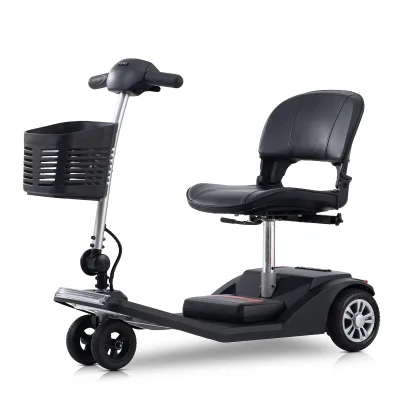
Yes, the scooter comes with a basket as a standard accessory. This feature adds practical utility for carrying personal items, groceries, or medical supplies. The inclusion of the basket enhances the scooter's functionality for daily use, providing convenient storage without compromising the folding mechanism or portability.